✓ Fulfillment costs typically range from 10-30% of product cost.
✓ Pricing models vary, including per-unit, tiered, and all-inclusive fees.
✓ Hidden fees for storage, kitting, and returns can significantly impact total costs.
✓ Choosing the right 3PL can reduce shipping costs by leveraging volume discounts.
How It Works
1
Inventory Ingestion & Storage
Your products arrive at the fulfillment center, where they are received, inspected, and stored securely. Storage fees are often based on space occupied (pallets, bins, shelves).
2
Order Processing & Picking
When a customer places an order, it's transmitted to the 3PL. Staff then locate and retrieve the specific items from storage, often using optimized picking routes.
3
Packaging & Shipping
Items are carefully packaged according to your brand guidelines and prepared for shipment. The 3PL then selects the most cost-effective carrier and generates shipping labels.
4
Tracking & Returns Management
Customers receive tracking information, and the 3PL handles the logistics of returns, including receiving, inspecting, and restocking returned items. This ensures a seamless post-purchase experience.
Understanding the Core Components of Fulfillment Costs
Photo: Tiger Lily / Pexels
Navigating the landscape of ecommerce fulfillment services pricing can feel like deciphering a complex financial puzzle. For any growing ecommerce business, understanding these costs is not just about budgeting; it's about optimizing profitability and ensuring sustainable growth. At its heart, fulfillment pricing is typically broken down into several key components, each contributing to the overall expense. The primary categories include receiving, storage, picking and packing, and shipping. However, a truly comprehensive understanding requires delving deeper into the nuances of each.
Receiving fees are incurred when your inventory arrives at the fulfillment center. These costs cover the labor involved in unloading, counting, inspecting, and entering your products into the warehouse management system (WMS). Pricing can vary based on how the inventory arrives – by pallet, carton, or individual unit – and the level of inspection required. Some 3PLs charge a flat fee per inbound shipment, while others might charge per pallet or per hour of labor. It's crucial to clarify these charges upfront, as inefficient receiving processes can quickly inflate costs.
Storage fees are perhaps the most straightforward but can accumulate significantly if not managed properly. These charges are for the physical space your inventory occupies within the fulfillment center. Common pricing models include per-pallet per-month, per-shelf per-month, or even per-cubic-foot. The cost can also fluctuate based on seasonality, with peak seasons sometimes incurring higher rates due to increased demand for space. Understanding your inventory turnover rate is vital here; slow-moving inventory will incur higher storage costs over time, impacting your overall ecommerce profitability. Many businesses find that optimizing their inventory levels is a direct way to reduce these recurring fees.
Picking and packing fees cover the labor involved in retrieving items from storage, preparing them for shipment, and applying necessary packaging. This is often charged per-unit or per-order. The complexity of the order – for instance, multiple SKUs, kitting requirements, or special packaging – can increase these costs. Some 3PLs offer tiered pricing based on order volume, rewarding businesses with higher order counts. It's important to differentiate between the 'pick' fee (locating the item) and the 'pack' fee (preparing it for shipment), as some providers itemize these separately. Additionally, the type of packaging material used can also influence costs, with custom branding or specialized protective packaging adding to the expense.
Shipping costs, while often the largest component, are typically passed through directly from the carrier, sometimes with a small handling fee. 3PLs often leverage their high shipping volumes to secure discounted rates from major carriers like USPS, FedEx, and UPS, which they can then pass on to their clients. The cost will depend on the package's weight, dimensions, destination, and chosen shipping speed. Understanding zone-based shipping, dimensional weight, and carrier surcharges is key to accurately forecasting these expenses. It's worth noting that some 3PLs offer proprietary shipping solutions or integrate with multiple carriers to provide the best possible rates and delivery times for your customers. This aspect of fulfillment can significantly impact customer satisfaction and repeat business.
Navigating Common Pricing Models and Hidden Fees
Photo: Monstera Production / Pexels
Beyond the core components, the way fulfillment centers structure their ecommerce fulfillment services pricing can vary widely, making direct comparisons challenging. There isn't a single, universally adopted pricing model, and businesses must carefully evaluate each option to determine the best fit for their specific needs and product types. The most common models include all-inclusive pricing, itemized pricing, and tiered pricing, each with its own advantages and disadvantages.
All-inclusive pricing, sometimes referred to as 'flat-rate' or 'bundled' pricing, aims to simplify the cost structure by combining several services into a single per-order or per-unit fee. This model can offer predictability and ease of budgeting, as many smaller charges are absorbed into one lump sum. However, the 'all-inclusive' nature can sometimes mask inefficiencies or mean you're paying for services you don't fully utilize. It's crucial to understand exactly what is included in the bundle and what might still be an additional charge. While seemingly straightforward, businesses should ensure the flat rate truly reflects their operational needs to avoid overpaying.
Itemized pricing, conversely, breaks down every service into individual line items. This model offers the highest level of transparency, allowing businesses to see precisely what they are paying for at each stage of the fulfillment process. You'll typically see separate charges for receiving, storage, picking, packing, and each specific value-added service. While more complex to manage, itemized pricing allows for greater scrutiny and optimization. Businesses can identify areas where costs are high and work with the 3PL to streamline processes or find more cost-effective solutions. It empowers businesses to negotiate or adjust services based on their evolving needs.
Tiered pricing is often applied to specific services, particularly storage or picking fees, based on volume. For example, storage might be cheaper per pallet if you store more than 50 pallets, or picking fees might decrease per unit once you exceed a certain number of orders per month. This model rewards scalability and can be beneficial for growing businesses. However, it requires careful forecasting to ensure you reach the desired tiers for maximum cost efficiency. Missing a tier due to unexpected dips in sales could result in higher per-unit costs.
Beyond these models, a critical aspect of understanding ecommerce fulfillment services pricing is identifying potential hidden fees. These are the charges that aren't always immediately apparent in a quote but can significantly inflate your overall costs. Common hidden fees include:
* **Account setup fees:** One-time charges to integrate your systems with the 3PL's WMS.
* **Minimum order volume fees:** If you don't meet a certain monthly order threshold, you might be charged a penalty.
* **Minimum storage fees:** A baseline charge for storage, regardless of how much space you use.
* **Peak season surcharges:** Additional fees during high-volume periods like holidays.
* **Kitting and assembly:** Charges for combining multiple items into a single product or gift set.
* **Returns processing:** Fees for handling customer returns, including inspection and restocking.
* **Custom packaging/labeling:** If you require specific branding or unique labels.
* **Inventory reconciliation:** Fees for auditing inventory discrepancies.
* **Accessorial charges:** Unexpected carrier fees for services like residential delivery, fuel surcharges, or remote area delivery.
Always request a detailed breakdown of all potential charges and ask about any fees not explicitly listed in the initial quote. A reputable 3PL will be transparent about their pricing structure and willing to discuss all potential costs.
Optimizing Your Fulfillment Costs: Strategies for Savings
Photo: Ann H / Pexels
Once you understand the fundamental components and pricing models of ecommerce fulfillment services pricing, the next crucial step is to actively seek ways to optimize these costs. Proactive management and strategic decision-making can lead to significant savings, directly impacting your bottom line and allowing for greater investment in other areas of your business, such as marketing or product development. Optimization isn't a one-time task; it's an ongoing process that requires regular review and adaptation.
One of the most impactful strategies is **inventory management optimization**. Excess inventory leads to higher storage costs and increased risk of obsolescence. Conversely, too little inventory can result in stockouts, lost sales, and expedited shipping fees to fulfill urgent orders. Implementing robust inventory forecasting tools and practices is paramount. Analyze historical sales data, consider seasonality, and monitor market trends to maintain optimal stock levels. Work closely with your 3PL to understand their storage fee structures and how your inventory turns impact your monthly bill. Consolidating SKUs or discontinuing slow-moving products can free up valuable warehouse space and reduce holding costs. Furthermore, understanding the concept of economic order quantity (EOQ) can help you determine the ideal order size to minimize both holding and ordering costs.
**Strategic warehouse location** plays a vital role in reducing shipping costs. If your customer base is concentrated in a specific region, choosing a fulfillment center nearby can significantly lower shipping times and expenses by reducing shipping zones. For businesses with a nationwide customer base, a distributed fulfillment network – utilizing multiple fulfillment centers across different geographical regions – can dramatically cut down on last-mile delivery costs and improve delivery speed. While this might introduce more complexity in terms of inventory distribution, the shipping cost savings often outweigh the added management effort, particularly for businesses with high order volumes. This is a key consideration when evaluating potential 3PL partners.
**Negotiating with 3PLs and carriers** is another powerful lever. Don't be afraid to ask for better rates, especially as your order volume grows. 3PLs value long-term partnerships and may be willing to offer more favorable terms for stable, growing clients. Similarly, while 3PLs often have discounted carrier rates, understanding the surcharges and negotiating for better terms on your own or through your 3PL can yield savings. Review your shipping invoices meticulously for errors or unnecessary charges. Consider diversifying carriers to find the best rates for different package types, destinations, or service levels. Sometimes, a slightly slower but more cost-effective shipping option can be presented to customers, offering them a choice.
**Packaging optimization** might seem like a minor detail, but it can have a substantial cumulative effect. Using the right-sized packaging reduces void fill material and, more importantly, minimizes dimensional weight charges imposed by carriers. Dimensional weight is a pricing technique that considers a package's volume, not just its actual weight. Oversized boxes can lead to significantly higher shipping costs. Explore eco-friendly and lightweight packaging options that protect your products adequately without adding unnecessary bulk or weight. Also, consider the cost of packaging materials themselves; buying in bulk or exploring alternative suppliers can lead to savings.
Finally, **streamlining your returns process** is crucial. Returns are an inevitable part of ecommerce, but inefficient handling can be costly. Work with your 3PL to establish clear, efficient protocols for receiving, inspecting, and restocking returned items. Automating return labels and providing clear instructions to customers can reduce customer service inquiries and streamline the process. Analyzing return reasons can also help identify product quality issues or inaccurate product descriptions that contribute to higher return rates, allowing you to address them proactively.
Choosing the Right Partner: Key Considerations Beyond Price
Photo: Mikhail Nilov / Pexels
While ecommerce fulfillment services pricing is undeniably a critical factor, making a decision based solely on the lowest quote can be a costly mistake in the long run. A truly effective fulfillment partnership goes far beyond just the numbers; it encompasses service quality, technological capabilities, scalability, and cultural fit. Evaluating these non-price factors is essential for choosing a 3PL that will truly support your business growth and enhance your customer experience.
**Technology and Integration:** A modern 3PL should offer robust technology that seamlessly integrates with your existing ecommerce platform (e.g., Shopify, Magento, WooCommerce). Look for features like real-time inventory tracking, order management dashboards, automated shipping updates, and comprehensive reporting. A powerful Warehouse Management System (WMS) is the backbone of efficient fulfillment, providing visibility and control over your operations. Poor integration can lead to manual errors, delays, and frustrated customers, ultimately costing you more than any initial savings on fees.
**Scalability and Flexibility:** Your business will likely experience fluctuations in order volume, especially during peak seasons or promotional periods. A good 3PL partner should be able to scale their operations up or down to meet your changing demands without compromising service quality. Inquire about their capacity during peak times, their ability to handle sudden spikes in orders, and their flexibility in adapting to new product lines or kitting requirements. A rigid 3PL can quickly become a bottleneck to your growth.
**Customer Service and Communication:** This is often overlooked but incredibly important. You need a partner who is responsive, proactive, and easy to communicate with. How quickly do they respond to inquiries? Do they assign a dedicated account manager? Do they offer transparent communication about potential issues or delays? A strong partnership is built on trust and effective communication, ensuring that any challenges are addressed swiftly and professionally, minimizing disruption to your customers.
**Service Level Agreements (SLAs):** Don't just accept verbal promises. Ensure that the 3PL's performance metrics are clearly defined in a Service Level Agreement. This should include details on order accuracy rates, on-time shipping rates, receiving turnaround times, and inventory accuracy. SLAs provide a measurable standard for performance and a basis for accountability, protecting your interests and ensuring quality of service.
**Reputation and References:** Research the 3PL's reputation within the industry. Read reviews, check their client testimonials, and, most importantly, ask for references from businesses similar to yours. Speaking directly with current clients can provide invaluable insights into the 3PL's reliability, service quality, and how they handle challenges. A strong track record and positive feedback from existing clients are strong indicators of a reliable partner.
**Specialized Services:** Does your business have unique fulfillment needs? For example, do you sell fragile items requiring special handling? Do you need kitting and assembly services? Do you have specific requirements for subscription box fulfillment? Some 3PLs specialize in certain product types or industries. Ensure the partner you choose has experience and capabilities that align with your specific demands and can offer these specialized services efficiently and cost-effectively. Choosing a 3PL that understands your niche can make a significant difference in operational efficiency and customer satisfaction.
Comparison
Feature
Best Option (Strategic 3PL)
Alternative 1 (In-house Fulfillment)
Alternative 2 (Small Local 3PL)
Cost Structure
Variable, scales with volume, negotiated discounts
High fixed costs, unpredictable variable costs
Often simple, but may lack transparency for extras
Scalability
Excellent, built-in infrastructure for growth
Limited, requires significant capital investment
Moderate, can grow but may hit capacity limits
Shipping Rates
Leverages high volume for significant discounts
Retail rates, less competitive
Some discounts, but less than large 3PLs
Technology & Integration
Robust WMS, seamless platform integration
Requires significant investment in software/hardware
Basic WMS, integration may be limited
Focus for Business Owner
Core business activities (marketing, product dev)
Logistics, operations, hiring staff
Still some operational oversight required
Risk Management
Distributed network, business continuity plans
Solely reliant on internal resources
Dependent on single facility/provider
Specialized Services
Often available (kitting, returns, FBA prep)
Requires internal expertise and resources
May offer some, but less comprehensive
What Readers Say
★★★★★
"Understanding ecommerce fulfillment services pricing was a huge challenge for our startup. This guide broke down everything clearly, helping us negotiate a much better deal with our 3PL. We're now saving significantly on storage and shipping!"
Sarah J. · Austin, TX
★★★★★
"Before reading this, I was focused only on the per-order fee. The insights on hidden costs and dimensional weight charges saved us from a very expensive mistake. Our new fulfillment partner is transparent and fits our budget perfectly."
Mark D. · Miami, FL
★★★★★
"We implemented the inventory optimization strategies discussed here and saw a 15% reduction in our monthly fulfillment bill. The advice on strategic warehouse location also helped us cut shipping times and costs dramatically, improving customer satisfaction."
Jessica L. · Seattle, WA
★★★★★
"The article was incredibly thorough. While we still had to do our own due diligence, the framework for evaluating 3PL pricing models and the importance of SLAs made our decision-making process much more informed. It's not just about the cheapest option."
David R. · Chicago, IL
★★★★★
"As a growing subscription box company, understanding the complexities of kitting and returns pricing was crucial. This guide laid out exactly what to look for and ask, helping us find a 3PL that truly understands our unique needs without overcharging."
Emily S. · Denver, CO
Frequently Asked Questions
What is the average cost of ecommerce fulfillment services?
The average cost of ecommerce fulfillment services varies widely, but generally, it can range from 10% to 30% of your product's retail price. This percentage depends heavily on factors like product size and weight, order volume, desired shipping speed, and the specific services required (e.g., kitting, returns management). It's crucial to get a detailed quote tailored to your business.
Are there hidden fees I should be aware of with fulfillment services?
Yes, hidden fees are common and can significantly impact your total costs. Look out for charges related to account setup, minimum order volumes, minimum storage, peak season surcharges, returns processing, kitting and assembly, and specific packaging requirements. Always request a comprehensive breakdown of all potential costs before signing a contract.
How can I reduce my ecommerce fulfillment costs?
You can reduce fulfillment costs by optimizing inventory levels to minimize storage fees, choosing a fulfillment center strategically located near your customer base to lower shipping costs, negotiating rates with 3PLs as your volume grows, and optimizing packaging to reduce dimensional weight charges. Streamlining your returns process also helps save money.
Is an all-inclusive pricing model better than itemized pricing?
Neither model is inherently 'better'; it depends on your business needs. All-inclusive pricing offers predictability and simplicity, bundling many services into one fee. Itemized pricing provides greater transparency, showing you exactly what you're paying for each service, which can be better for optimization but more complex to manage. Evaluate what's included and excluded in an all-inclusive plan carefully.
How do fulfillment services calculate shipping costs?
Fulfillment services typically calculate shipping costs based on several factors: package weight (actual and dimensional weight), package dimensions, the shipping destination (distance and shipping zone), and the chosen shipping speed (e.g., ground, express). 3PLs often leverage their high shipping volumes to secure discounted rates from major carriers, which they then pass on to their clients.
Who should consider using ecommerce fulfillment services?
Ecommerce fulfillment services are ideal for growing online businesses that are spending too much time on packing and shipping, experiencing inconsistent order volumes, or struggling with high shipping costs. They are also beneficial for businesses looking to expand into new regions, improve delivery speeds, or free up internal resources to focus on product development and marketing.
What happens if my inventory levels are too low with a 3PL?
If your inventory levels are too low, you risk stockouts, leading to lost sales and potential customer dissatisfaction. Some 3PLs may also charge minimum storage fees even if you have very little product, or you might incur additional costs for rush re-stocking or expedited shipping to compensate for low stock. Effective inventory forecasting is key to avoiding these issues.
How will AI and automation impact ecommerce fulfillment services pricing in the future?
AI and automation are expected to drive down labor costs and improve efficiency in fulfillment centers, potentially leading to more competitive pricing for certain services. AI-driven forecasting can optimize inventory, while robotic picking and packing can speed up processing. However, the initial investment in these technologies might also be reflected in service fees, especially for premium, high-tech fulfillment solutions.
Mastering ecommerce fulfillment services pricing is essential for profitable growth. By understanding the cost components, scrutinizing pricing models, and implementing strategic optimization, you can secure a fulfillment partner that elevates your business. Take control of your logistics costs today and unlock greater profitability.

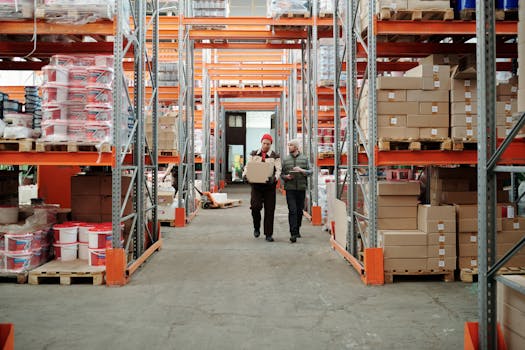 Photo: Tiger Lily / Pexels
 Photo: Monstera Production / Pexels
 Photo: Ann H / Pexels
 Photo: Mikhail Nilov / Pexels